
Digital Technologies – AI & Vision-Based Projects
Client: Heavy Engineering
Problem Statement / Project Scope:
- Objective: Improve stability between the engine and chassis to enhance structural integrity and vibration control.
- Challenge: Stress concentrations and vibration transmission can compromise durability under dynamic loads and mounting misalignments.
- Approach: Simulated engine-chassis coupling using Siemens Simcenter 3D FEA and MBD to capture deformation, stress hotspots, and vibrational response.
- Outcome: Achieved optimized mount positioning, reduced critical stress zones, and ensured structural stability under operational and peak loads.
Solution Highlights:
- FEA-Based Structural Integrity: Conducted stress-strain evaluations across chassis mount zones.
- Multibody Dynamics (MBD): Simulated engine inertia interaction with chassis system.
- Load Case Variability: Simulated different loading scenarios—start-up torque, road shocks, misalignments.
- Design Optimization: Implemented iterations with material adjustments to improve damping.
Value Addition:
- 40% reduction in transmitted vibration to chassis structure
- 28% improvement in component fatigue life under dynamic load
- Enhanced operational stability and safety under peak loading conditions
- A virtual testbed for future stability design evaluations
Client: Aerospace Industry
Problem Statement / Project Scope:
- Objective: Validate structural integrity of turbine-bearing support under dynamic excitation.
- Challenge: Assess random vibration response due to rotor imbalance.
- Approach: Simulate worst-case spectral excitations to capture resonance behavior.
- Outcome: Identify potential resonance-induced failure zones, enhance reliability.
Solution Highlights:
- Modal Analysis to extract natural frequencies.
- Damping Characterization based on turbine test data.
- Random Vibration (PSD): Broadband PSD with radial excitation.
- Results Extraction: RMS/peak stresses, displacements & acceleration fields.
Value Addition:
- Early detection of resonance-prone regions
- 25–30% reduction in prototyping costs & 20% faster design cycle
- Supports predictive maintenance planning
Client: Motorcycle OEM
Problem Statement / Project Scope:
- Objective: Validate structural durability under broadband dynamic loads from high-speed rides on irregular roads.
- Challenge: Fatigue & failure risks from non-deterministic excitations.
- Approach: Random vibration loads assessed with real-world conditions.
- Outcome: Identify fatigue-sensitive regions early to ensure reliability.
Solution Highlights:
- Modal Analysis: Natural frequencies clear of road excitation to avoid resonance.
- Stress & Fatigue Evaluation: RMS stress & strain energy density to find fatigue-prone zones.
- Deformation & Load Checks: Displacement & reaction forces verified.
- Simulation Setup: TET10 mesh, refined critical zones, orthotropic Al properties, PSD inputs per ISO 2631 standards.
Value Addition:
- Identify fatigue-prone regions & optimize alloy wheel durability
- 35% reduction in physical test efforts & 20% faster validation
- Digital Twin integration enables predictive design-phase analysis
Client: Truck Manufacturing OEM
Problem Statement / Project Scope:
- Objective: Improve crane dynamics in truck body assembly for safety & reliability.
- Challenge: Crane instability, load imbalance, CG misalignment.
- Approach: Evaluate CG shifts, optimize lifting speeds, predict instability scenarios.
- Outcome: Enable safe, efficient crane operations, minimize downtime risks.
Solution Highlights:
- Advanced Multi-Body Dynamics simulation, tracking CG displacement.
- Variable rigging & lift angles to understand CG drift & instability.
- Crane Speed Optimization for safe operating zones.
Value Addition:
- Early detection of fatigue risks & CG instability
- Customized crane speed profiles minimize overstress & maintenance
- Replaced physical tests with simulations, cutting prototype validation costs by ~30%
Client: Toy Manufacturing Industry
Problem Statement / Project Scope:
- Objective: Simulate dynamic behavior & structural performance of foldable scooter under varied load & terrain conditions.
- Challenge: Evaluate performance & safety across loading scenarios.
- Approach: Analyze flexible body stress-strain response & terrain-induced vibrations.
- Outcome: Identify potential failure zones, optimize design parameters before prototypes.
Solution Highlights:
- Multi-Load Simulation: Assessed scooter dynamics under different loads.
- Flexible Body Analysis: Modeled the frame as flexible body for stress, strain, deformation.
- Terrain Interaction: Simulated urban road-induced vibrations for ride quality.
- Topology Optimization: Weight-saving geometry refinements while maintaining integrity.
Value Addition:
- Enabled early insights, saving material & validation costs
- 18% weight reduction
- Reduction in prototype iterations
- Digital twin model for future upgrades
- Enhanced ride safety & comfort through vibration tuning
Client: Crane Manufacturer
Problem Statement / Project Scope:
- Objective: Simulate tower crane operations to minimize container oscillation during lifting & horizontal transport.
- Challenge: Container sway affecting efficiency & safety.
- Approach: Analyze CG movement, dynamic behavior across operations.
- Outcome: Identify control strategies to suppress oscillations.
Solution Highlights:
- Kinematic Modeling: Full crane system simulation
- Container Dynamics: CG displacement, swing angles, inertia-tension interaction
- Operational Studies: Evaluate lifts & translations to identify resonance risks
- Control Insights: Recommend damping, acceleration ramps & motion planning
Value Addition:
- Improved safety through sway analysis
- Reduction in load swing amplitude by over 40%
- Support control system development & virtual tests
- Digital twin for future monitoring
Client: Forklift Manufacturer
Problem Statement / Project Scope:
- Objective: Simulate forklift dynamics during lifting & maneuvering to assess stress & displacement behavior.
- Challenge: Abrupt starts, turns, load shifts affecting stress-sensitive regions.
- Approach: Simcenter to replicate real-world dynamics, quantify displacements.
- Outcome: Improve structural integrity, safety, and efficiency.
Solution Highlights:
- Displacement Analysis: Track mast, forks, chassis & counterweight displacements
- Dynamic Load Scenarios: Static lifts, loaded turns, emergency braking
- Stress Detection: Identify high-displacement, wear-prone components
Value Addition:
- Identify load-shift-induced displacement paths
- Enable adaptive load handling designs for forklifts
Client: Heavy Engineering
Problem Statement / Project Scope:
- Objective: Validate behavior of an overhead crane system for precision lifting.
- Challenge: Limitations of calculations & empirical methods causing vibrations.
- Approach: Dynamic load transfer, control system, structural response.
- Outcome: Optimized performance, suppressed vibrations & predictive maintenance.
Solution Highlights:
- Load Path Estimation
- Fatigue Analysis
- Control System Integration
- Vibration Minimization
Value Addition:
- 40% reduction in load sway, 30% decrease in design iterations & enhanced reliability
- Virtual commissioning platform predicts performance accurately
- Digital Twin enables maintenance planning & safety
Research & Projects
Digital Technologies – AI & Vision-Based
 Center for Predictive Engineering Analytics
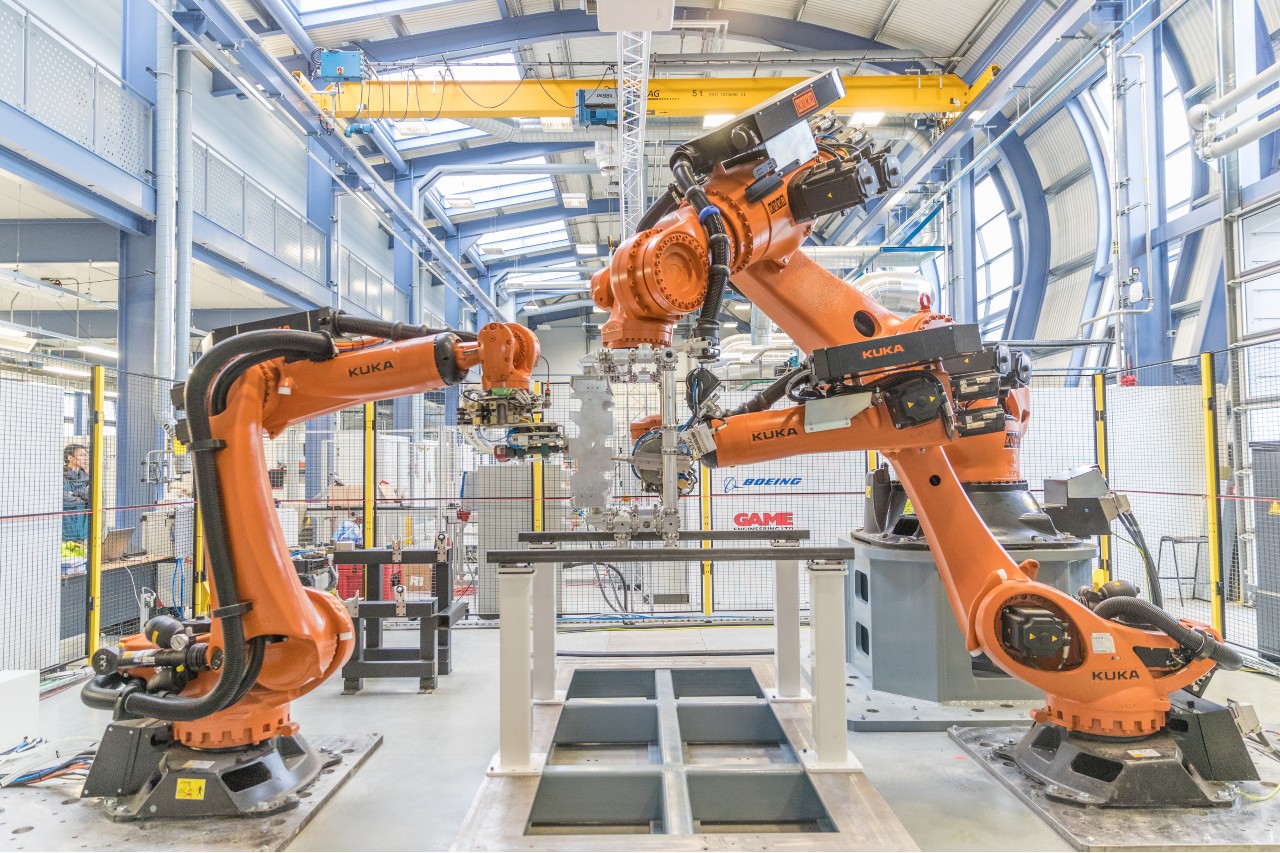 Smart Factory Research Center
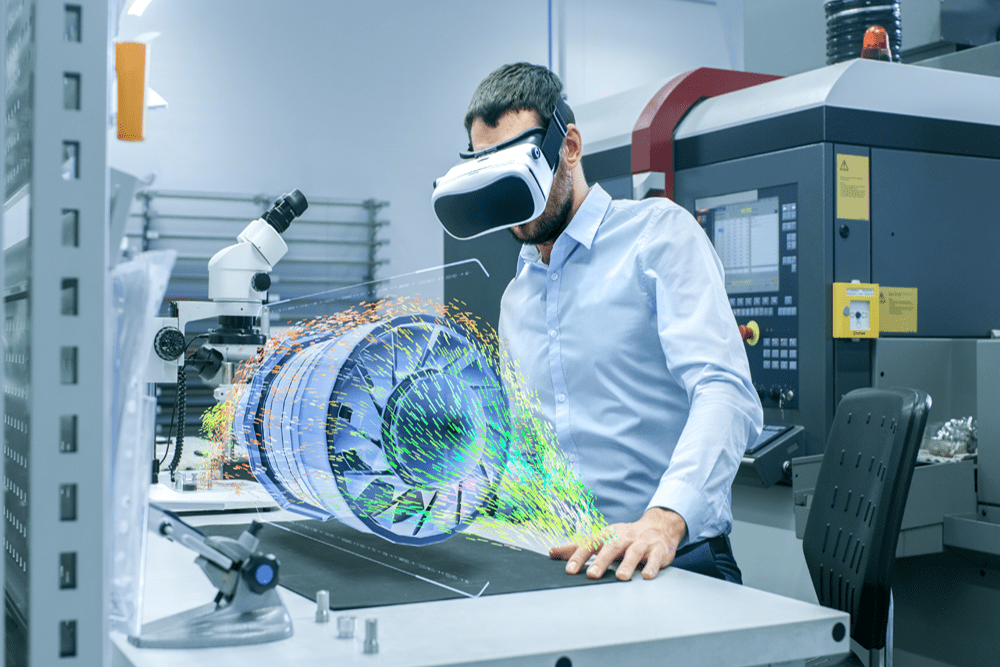 AR / VR Research Center
 Asset Performance Management